

Schedule a Consultation
Contact Us
By Dr. Anu Antony
Created On March 06, 2026
Antony Institute for Aesthetics and Plastic Surgery

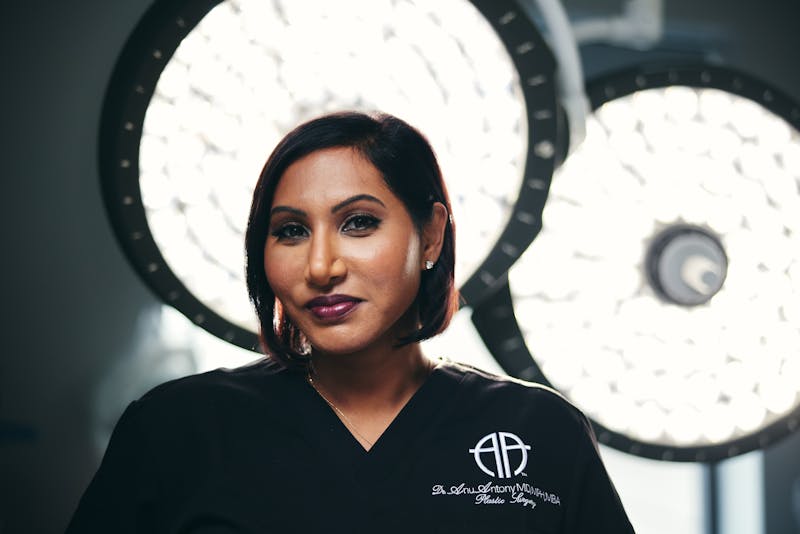
In aesthetic medicine, the difference between outcomes that feel forced and those that appear effortless often comes down to one principle: intention.
As a plastic surgeon trained in both the sciences at Harvard and Stanford and the arts at the Lorenzo Medici Institute in Florence, Ilearned that exceptional aesthetic results require the same thoughtful design process as any work of art. Every decision must be considered not only for its immediate impact, but for how it will evolve, interact with natural aging, and maintain balance over years and decades.
Too often, patients approach aesthetic treatments reactively. A line appears, so they treat the line. Volume diminishes, so they add filler. A feature bothers them, so they address that feature in isolation.
While understandable, this approach creates several challenges. Treatments performed without comprehensive planning can lead to overcorrection, imbalance, or results that look appropriate today but age poorly. When each concern is addressed separately rather than as part of a unified aesthetic plan, the face can lose its natural cohesion.
The facial structure is remarkably complex. Every feature relates to every other feature. The position of the brow affects how the eyes appear. The projection of the chin influences the perception of the nose. The volume in the midface determines how the lower face ages. Addressing one area without considering its relationship to the whole can create unintended consequences.
Intentional aesthetic care begins with a comprehensive evaluation at the Antony Institute for Aesthetics and Plastic Surgery. During consultation, I examine facial proportions, bone structure, soft tissue distribution, muscle movement patterns, and how these elements interact. I consider the patient's age, skin quality, lifestyle, and long-term goals.
This evaluation informs a cohesive treatment plan. Rather than addressing isolated concerns, we design a strategy that considers:
Intention also requires restraint. In aesthetic medicine, more is rarely better. The goal is not to fill every line, lift every structure, or maximize every enhancement. The goal is to support natural beauty with precision and subtlety.
This means recommending a bespoke treatment strategy that integrates patient requests. It means prioritizing quality over quantity, focusing on treatments that offer meaningful improvement rather than marginal changes. It means understanding that aesthetic care often functions best as a series of specific, strategic interventions rather than drastic change.
Restraint preserves natural facial movement and expression. It maintains individuality. It ensures that results age gracefully rather than appearing frozen or overdone as time passes.
One of the most important aspects of intentional care is prevention. Starting aesthetic treatments before significant aging occurs allows us to maintain structure rather than try to restore it later.
Preventive Botox, for example, can slow the formation of deep-set lines by reducing repetitive muscle movements that etch wrinkles into the skin. Strategic filler placement can support areas prone to volume loss before hollowing becomes severe. Medical-grade skincare protects against environmental damage that accelerates aging.
These preventive approaches work best when implemented consistently over time. They require less product, less correction, and less intervention than waiting until changes become pronounced. Most importantly, they preserve the natural baseline rather than attempting to recreate it.
The same principles apply to surgical procedures. A facelift, rhinoplasty, or breast augmentation should be designed with the same comprehensive approach.
I consider not only what the patient wants to change, but what should remain unchanged. Preservation of natural features that contribute to individual beauty is just as important as correction of concerns. A nose that fits one face beautifully may look out of place on another. Breast size that suits one body frame may overwhelm a different build.
Surgical planning also accounts for healing, scarring, and how results will settle over months and years. Tissues continue to evolve after surgery. Swelling resolves, scars mature, and structures adapt to their new positions. Designing procedures with this evolution in mind ensures that outcomes remain balanced throughout the healing process and beyond.
Intentional care requires partnership between surgeon and patient. Open communication about goals, expectations, and limitations creates the foundation for successful outcomes.
During consultation, I encourage patients to articulate not just what they want to change, but how they want to feel. Aesthetic goals are deeply personal. Some patients seek subtle refinement that only they will notice. Others want more visible transformation. Understanding these preferences allows me to tailor recommendations appropriately.
I also discuss what intention means in practical terms: appropriate treatment intervals, realistic timelines, the importance of consistency, and how results will require maintenance over time. Aesthetic care is not a one-time fix but an ongoing relationship with one's appearance.
The patients who achieve the most refined, natural results are those who approach aesthetic care as a long-term investment rather than a quick solution. They understand that exceptional outcomes develop over time through strategic planning and consistent maintenance.
This approach requires patience. It means trusting the process and allowing results to develop gradually. It means prioritizing quality and longevity over immediate gratification.
But the results speak for themselves. When aesthetic care is designed with intention, outcomes feel effortless. They enhance rather than alter. They age gracefully rather than becoming outdated. They support confidence without announcing themselves.
As we move through spring, I encourage patients to approach their aesthetic goals with intention. Rather than reacting to isolated concerns, consider the comprehensive picture. Think about what you want your appearance to communicate not just today, but five, ten, twenty years from now.
Schedule a consultation focused on evaluation and design rather than immediate treatment. Discuss preventive strategies. Develop a plan that accounts for natural aging and how to support your structure over time.
When aesthetic care is guided by intention, results become more than skin deep. They reflect thoughtful design, expert execution, and a commitment to preserving natural beauty through every stage of life.
Schedule a consultation with Dr. Antony today!