

Effortless, By (Surgical) Design By Dr. Anu Antony
Where Precision, Restraint, and Intention Reveal the Beauty that was Always Within
There is a moment you recognize it—a clean dive into the pool, the kind that barely makes a ripple, a perfectly executed golf swing, or a flawless serve that seems to float across the court. The motion is fluid, unforced, almost inevitable. It appears instinctive, as if it required no thought at all. Yet what appears effortless is anything but; it is shaped by discipline, refinement, and a deep understanding of form.
The same can be said of the most enduring works of art. In Florence, studying at the Lorenzo de’ Medici Institute of Art, I spent hours with Michelangelo’s sculptures—figures that seem to breathe despite being carved from stone. What is striking is not perfection, but balance. The tension in contrapposto, the subtle shift of weight, the harmony of proportion. Nothing is exaggerated, and yet everything is intentional. The artistry lies in knowing what to reveal—and what to leave untouched.
Facial aesthetics, at its best, follows this same philosophy.
Aging is often described in terms of lines and wrinkles, but the deeper story is one of structure. Over time, the face gradually loses volume, softens in its contours, and shifts in position. Light no longer reflects as it once did; shadows deepen, transitions become less fluid. The face, in a sense, loses some of its original architecture.
Restoring that architecture requires more than surface treatment. It asks for a careful understanding of depth, proportion, and restraint.
Facial fat grafting offers one approach. Using one’s own tissue, volume can be returned to areas where it has quietly diminished—the cheeks, the temples, the subtle planes that give the face its dimension. Beyond structure, fat carries regenerative qualities that can improve the quality of the overlying skin, lending a softness and vitality that is difficult to replicate artificially. The effect is not overt. It is the quiet return of light to the face. Patients are often surprised to learn that results evolve gradually over several months, as the transferred tissue integrates and settles.
Equally important is position. As tissues descend over time, the face can appear heavier or less defined, even when volume is restored. Modern facelift techniques address this not by tightening the skin, but by gently repositioning the deeper layers—allowing the face to settle back into a more natural alignment. The recovery is typically measured in weeks rather than days, and the most successful outcomes depend as much on careful healing as on surgical technique.
For those considering surgery, a few principles are worth understanding. First, natural results depend on respecting anatomy—procedures that focus only on the surface rarely age as well. Second, subtlety is cumulative; small refinements, thoughtfully performed, often create a more lasting and believable outcome than dramatic change. And finally, timing matters. Intervening before changes become advanced allows for more conservative approaches and smoother results.
These techniques are most effective when used with restraint. Much like a sculptor refining a figure, the goal is not to add or subtract indiscriminately, but to work in balance. The face should not look altered, but clarified—its original character preserved, its expression uninterrupted.
There is a quiet confidence in this approach. It does not seek to change identity, but to support it. To allow the external to reflect the internal without distraction.
Effortless, whether in movement, art, or appearance, is never the absence of effort. It is the refinement of it—the point at which technique disappears, and what remains feels simply, and authentically, whole.
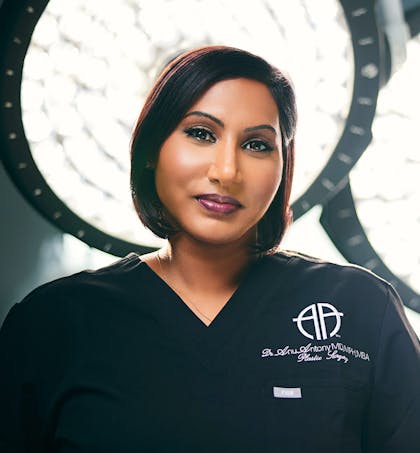
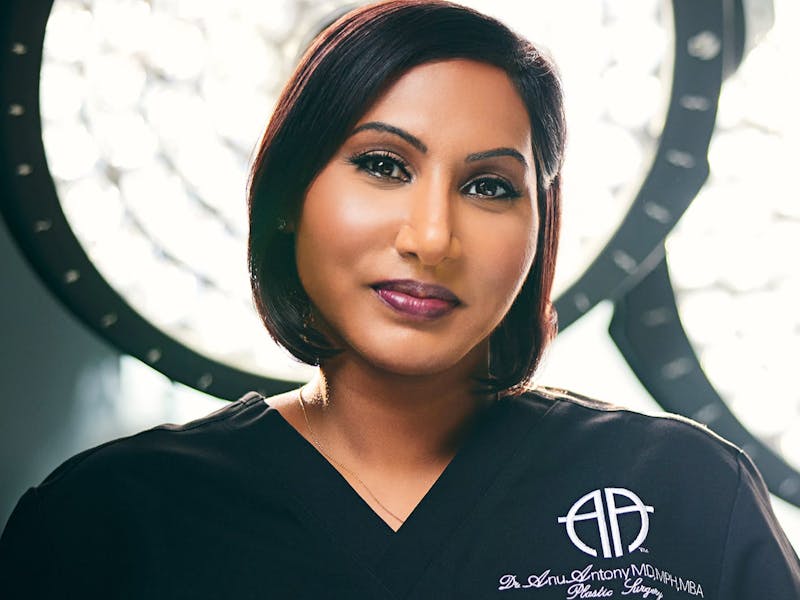
Dr. Anu Antony is a Harvard- and Stanford-trained, board-certified plastic surgeon at the Antony Institute for Aesthetics and Plastic Surgery, and founder of the luxury medical-grade skincare line, Anu Science of Beauty. With formal training in art from the Lorenzo de’ Medici Institute of Art in Florence, her approach blends anatomy with artistry, guided by a commitment to education, precision, and natural, enduring results. Outside the operating room, she can often be found attempting to perfect a serve—continuing her quiet pursuit of effortlessness both in practice and in life.