

Dr. Antony's Approach to Facial Volume Loss

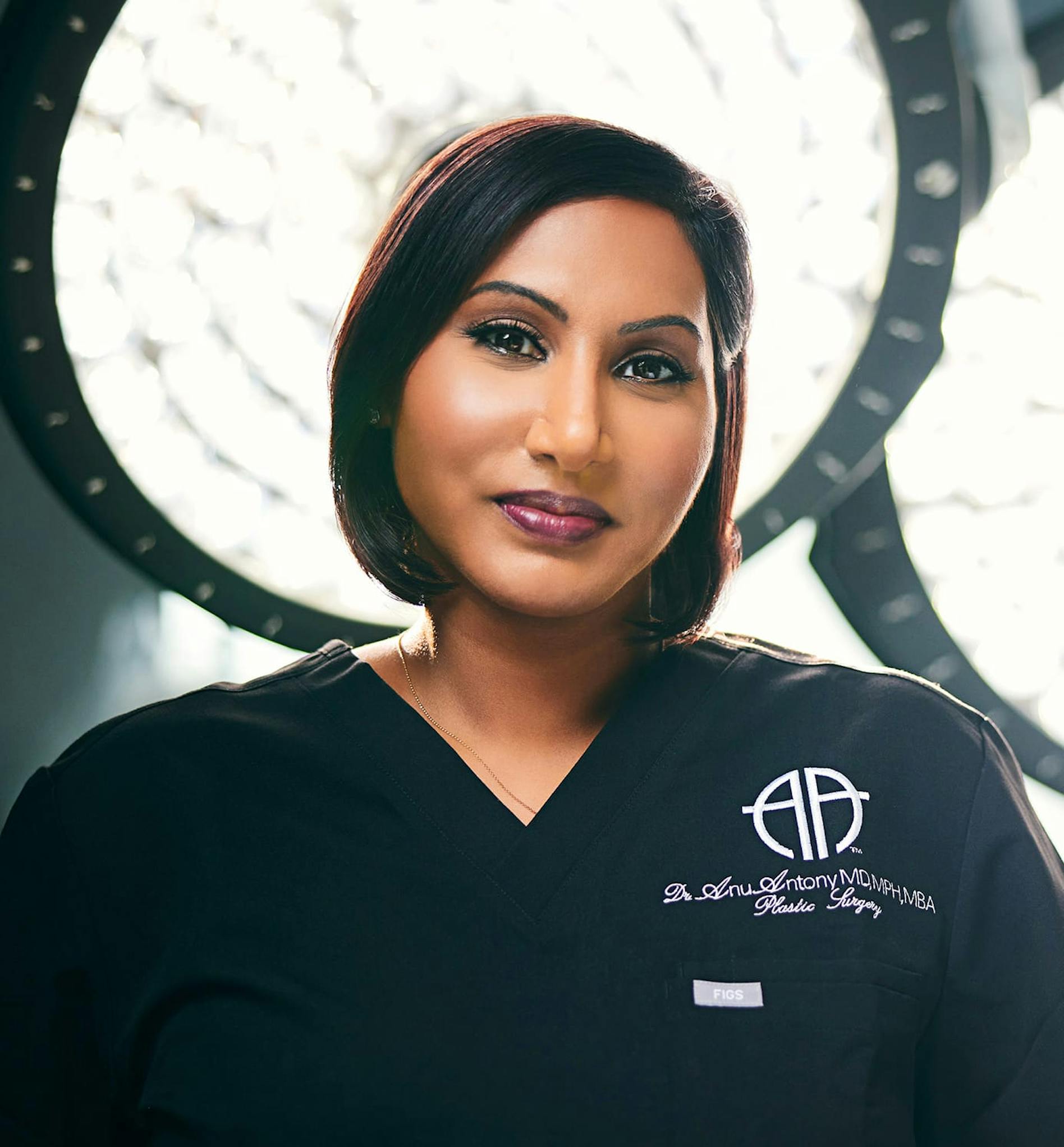
Dr. Anu Antony, MD, MPH, MBA, FACS, is a Harvard- and Stanford-trained, board-certified plastic surgeon in Raleigh and Cary, NC, who combines her reconstructive training with an artist's eye. Patients often come to her after rapid weight loss on GLP-1 medications such as Ozempic, Wegovy, and Mounjaro, looking to restore the facial fullness they've lost. Schedule a consultation to talk through your options with Dr. Antony.

Woman touching her neck

What Is Ozempic Face?

Ozempic face, while not a medical diagnosis, is a term for the exaggerated facial aging that can follow rapid, significant weight loss on GLP-1 medications, according to a systematic review published in Aesthetic Surgery Journal Open Forum. The fat pads that normally cushion and support the face shrink faster than the skin above them can adjust, leaving cheeks hollow and skin loose. The name references Ozempic specifically, but the same changes have been reported with other medications in this class, including Wegovy, Mounjaro, and Zepbound. Facial volume loss can often be minimized, though not always avoided. Working closely with a prescribing physician on dosage and pace of weight loss can help reduce how dramatically the face changes. Maintaining adequate protein intake and hydration supports skin elasticity during weight loss. Patients who notice early signs of facial hollowing often benefit from starting filler treatment sooner rather than waiting until volume loss becomes more pronounced.

Background media

Signs You May Notice With Ozempic Face

Facial volume loss after rapid weight loss tends to show up in predictable places. Patients considering treatment for Ozempic face in Raleigh and Cary, NC often notice:

  • Hollowing in the cheeks and temples
  • Deeper smile lines and lines running from the mouth to the chin
  • Thinner, flatter lips
  • Under-eye hollows or dark circles
  • Loose, crepey skin along the jawline
  • A tired or gaunt look, even when you feel your healthiest
Banner media

Why GLP-1 Medications Cause Facial Volume Loss

The face relies on small, distinct fat pads to keep the cheeks full and the jawline smooth. Rapid weight loss can deplete these pads faster than skin can retract to match the smaller structure underneath. According to member surgeons of the American Society of Plastic Surgeons, this mismatch is what gives the face a hollow, deflated look, sometimes within just a few months of starting treatment.

How Common Is Ozempic Face Becoming?

Interest in treating Ozempic face has grown alongside GLP-1 use nationwide. Roughly one in eight U.S. adults has taken a GLP-1 medication, according to a 2024 KFF Health Tracking Poll, and use of hyaluronic acid dermal fillers has roughly doubled since 2017, according to plastic surgery data reported by CNN. For patients in Raleigh and Cary, that shift has made facial volume restoration a regularly requested consultation.

Banner media
Doctor media

How Dr. Antony Treats Ozempic Face in Raleigh and Cary

Dr. Antony approaches facial volume loss the way she approaches every procedure: as both a science and an art form. After evaluating which fat pads and skin layers have changed, she builds a treatment plan around each patient's specific pattern of volume loss. Dermal fillers restore fullness to the cheeks, temples, and lips in a single office visit. A liquid facelift combines fillers with BOTOX to lift and contour the midface without surgery. For patients with more advanced skin laxity, a surgical facelift may offer longer-lasting correction.

Why Choose Dr. Antony for Facial Volume Restoration

Dr. Antony brings more than 20 years of experience to facial rejuvenation, including fellowship training at Memorial Sloan-Kettering Cancer Center and Massachusetts General Hospital/Harvard Medical School. Her early training in sculpture and painting at the Lorenzo Medici Institute of Art in Florence, Italy, shapes how she evaluates facial proportion before recommending treatment. She is a Fellow of the American College of Surgeons and the American Society of Plastic Surgeons.

What to Expect During Your Consultation

A consultation for Ozempic face treatment in Raleigh and Cary, NC begins with a conversation about weight history, timeline, and aesthetic goals. Dr. Antony examines the face to identify where volume has been lost and whether skin laxity is also a concern. From there, she recommends a plan that may combine fillers, collagen-stimulating treatments, or surgical options depending on the degree of change. Most patients leave with a clear timeline and cost estimate before committing to treatment.

Background media

Can Ozempic Face Be Prevented?

Facial volume loss can often be minimized, though not always avoided. Working closely with a prescribing physician on dosage and pace of weight loss can help reduce how dramatically the face changes. Maintaining adequate protein intake and hydration supports skin elasticity during weight loss. Patients who notice early signs of facial hollowing often benefit from starting filler treatment sooner rather than waiting until volume loss becomes more pronounced.

Woman with her hair pulled to the side

Treatments for Facial Volume Loss

  • Dermal Fillers: Restores lost volume in the cheeks, lips, and under-eye area in a single visit.
  • Liquid Facelift: Combines fillers and BOTOX to lift and contour the face without surgery.
  • Cheek Augmentation: Adds structure and support to cheeks affected by fat pad loss.
  • BOTOX: Softens dynamic lines that can become more visible as facial volume decreases.
  • Facelift: Addresses more advanced skin laxity that fillers alone cannot correct.
Background media

Ozempic Face FAQs

Does insurance cover treatment for facial volume loss caused by GLP-1 medications?

Will facial volume return if I stop taking the medication?

Can skincare alone fix Ozempic face?

Do I need to stop taking my GLP-1 medication to get treatment?

How long do filler results last?

What are the risks of filler treatment for facial volume loss?

Is there downtime after filler treatment?

Will fillers make my face look overfilled?

Does insurance cover treatment for facial volume loss caused by GLP-1 medications?

No. Treatments to correct facial volume loss are considered cosmetic and are not covered by insurance, though flexible payment options may be available.

Will facial volume return if I stop taking the medication?

Facial fat pads do not always rebound the way body fat can. Many patients still need filler or another volumizing treatment to restore lost fullness, even after stopping the medication.

Can skincare alone fix Ozempic face?

Skincare can support skin quality and hydration and is part of an overall strategy to improve the face, but it cannot replace lost facial fat pads. Restoring volume typically requires dermal fillers or another volumizing treatment.

Do I need to stop taking my GLP-1 medication to get treatment?

No. Treatment for facial volume loss does not require stopping a prescribed GLP-1 medication. Dr. Antony coordinates care around each patient's existing weight management plan.

How long do filler results last?

Results vary by product and treatment area, but many dermal fillers used for facial volume loss last between six months and two years before a touch-up is needed.

What are the risks of filler treatment for facial volume loss?

Common side effects include temporary bruising, swelling, and tenderness at the injection site. Rare but more serious complications, such as a blocked blood vessel, are possible with any injectable treatment, which is why proper technique and product selection matter.

Is there downtime after filler treatment?

Most patients return to normal activities the same day, though some swelling or bruising may be visible for a few days.

Will fillers make my face look overfilled?

Not when volume is restored gradually and proportionally. Dr. Antony's approach favors natural-looking results that reestablish balance rather than adding excess volume.

Restore Your Facial Balance With Dr. Antony

Rapid weight loss should not come at the cost of looking tired or hollow. Dr. Antony offers personalized facial volume restoration for patients throughout Raleigh and Cary, NC, combining her surgical training with an artist's understanding of facial balance. Schedule a consultation to discuss which treatment approach fits your face and your goals.


This information is provided for educational purposes only and does not replace a consultation with a board-certified plastic surgeon. Outcomes, risks, and suitability vary from patient to patient.

Logo media

Schedule a Consultation

This field is required.
Submit Contact Form
Background media
Accessibility: If you are vision-impaired or have some other impairment covered by the Americans with Disabilities Act or a similar law, and you wish to discuss potential accommodations related to using this website, please contact our Accessibility Manager at (919) 296-0256.
Contact Us